CUT ONE
Capability
When the issue is not effort, but the skill, structure or confidence needed to lead the situation well.

WHAT THIS CUT REVEALS
When capability is the issue, the leader may care deeply and work hard, but still lack the tools, language or experience required for the situation in front of them. More effort will not fix what needs clearer structure, better preparation and repeated practice.
Capability is the layer of skill, structure and practical confidence.
Skill
The practical ability to handle the task, conversation or leadership moment.
Structure
The frameworks, scripts or process that make the next step clearer.
Confidence
The steadiness that comes from preparation, practice and knowing what to do.
WHEN THIS IS THE ISSUE
Capability gaps often look like hesitation, avoidance or inconsistency.
The leader may know that something needs to be addressed, but not have the language, process or confidence to handle it well. As a result, important conversations are delayed, expectations stay unclear and the same problems keep resurfacing.
Typical signs
Difficult conversations are delayed
Expectations are unclear
Feedback lacks structure
The same people problems keep returning
Confidence drops in unfamiliar situations

WHAT MAKES CAPABILITY GAPS WORSE
Good intentions do not replace a practical method.
Capability problems often persist because leaders try to push through them with effort, personality or experience alone. Without a clear structure, the same situation becomes harder each time it is avoided, improvised or handled inconsistently.
Avoiding the moment
The issue is delayed because the leader is not sure how to begin.
Over-relying on instinct
The leader improvises without a clear structure, which creates inconsistency.
Mistaking effort for capability
More time, care or pressure is applied when the real need is skill, language or process.
WHAT HELPS AT THIS LAYER
Capability improves when leaders have something practical to practise.
The answer is not simply more information. Leaders need usable frameworks, clear language, preparation tools and opportunities to apply the skill in real situations. Capability grows when structure becomes repeatable behaviour.
Practical frameworks
Simple structures that help leaders know what to do next.
Clear language
Scripts, prompts and conversation starters that reduce hesitation.
Repeated application
Practice that turns knowledge into confidence and consistency.

RECOMMENDED NEXT STEPS
Start with the tools that build practical leadership capability.
These resources help leaders prepare, communicate and act with more structure when capability is the layer creating friction.
The Crucial Conversation Planner
Prepare for high-stakes conversations with a clear purpose, factual message, response plan and follow-through structure.
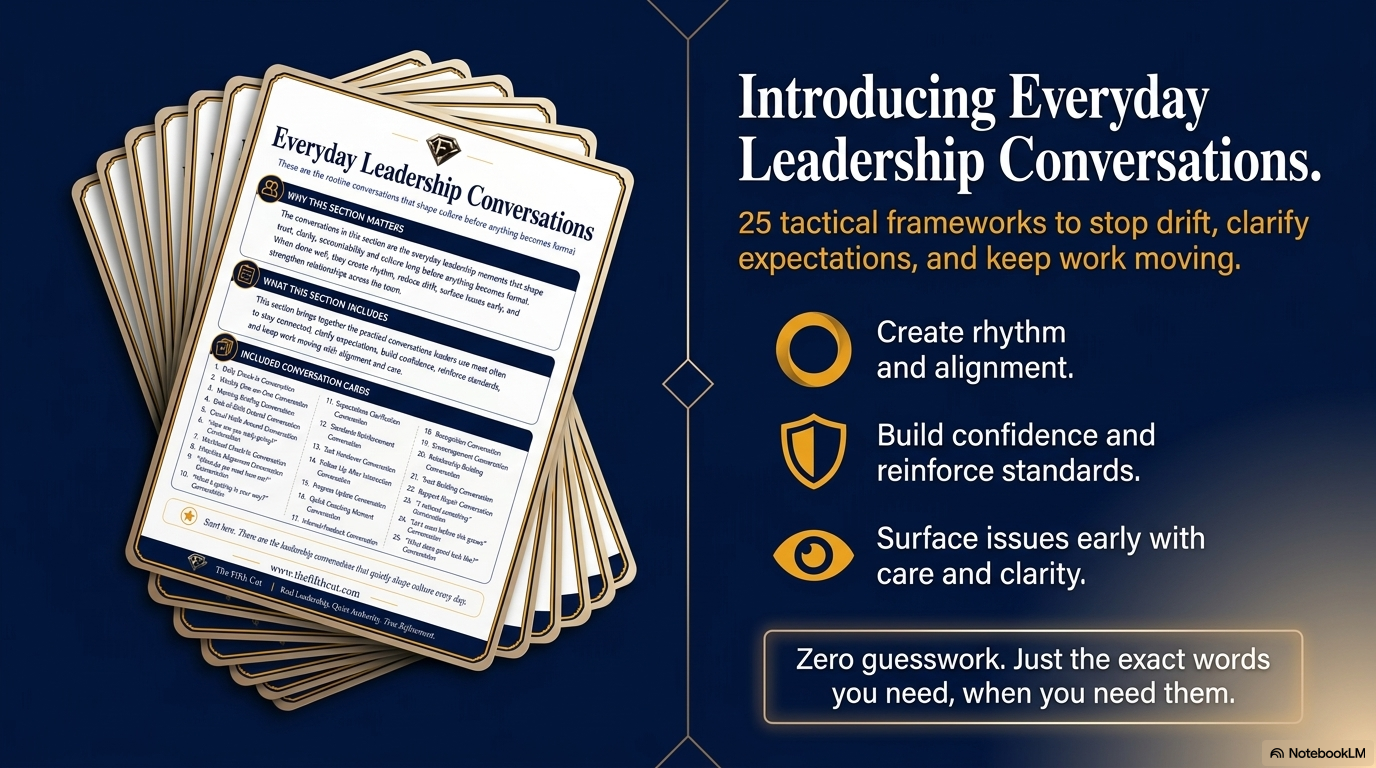
Everyday Leadership Conversations
Use structured conversation prompts for check-ins, expectations, feedback, recognition and early intervention.
Mastering Leadership Core Skills
Strengthen the core leadership skills, self-awareness and practical judgement needed to lead with greater confidence.
STILL NOT SURE IF CAPABILITY IS THE ISSUE?
Start with the Leadership Layer Audit.
The audit helps you identify whether the friction sits in capability, momentum, presence, wisdom or legacy, then points you towards the most useful next step.