 Image 1 of 9
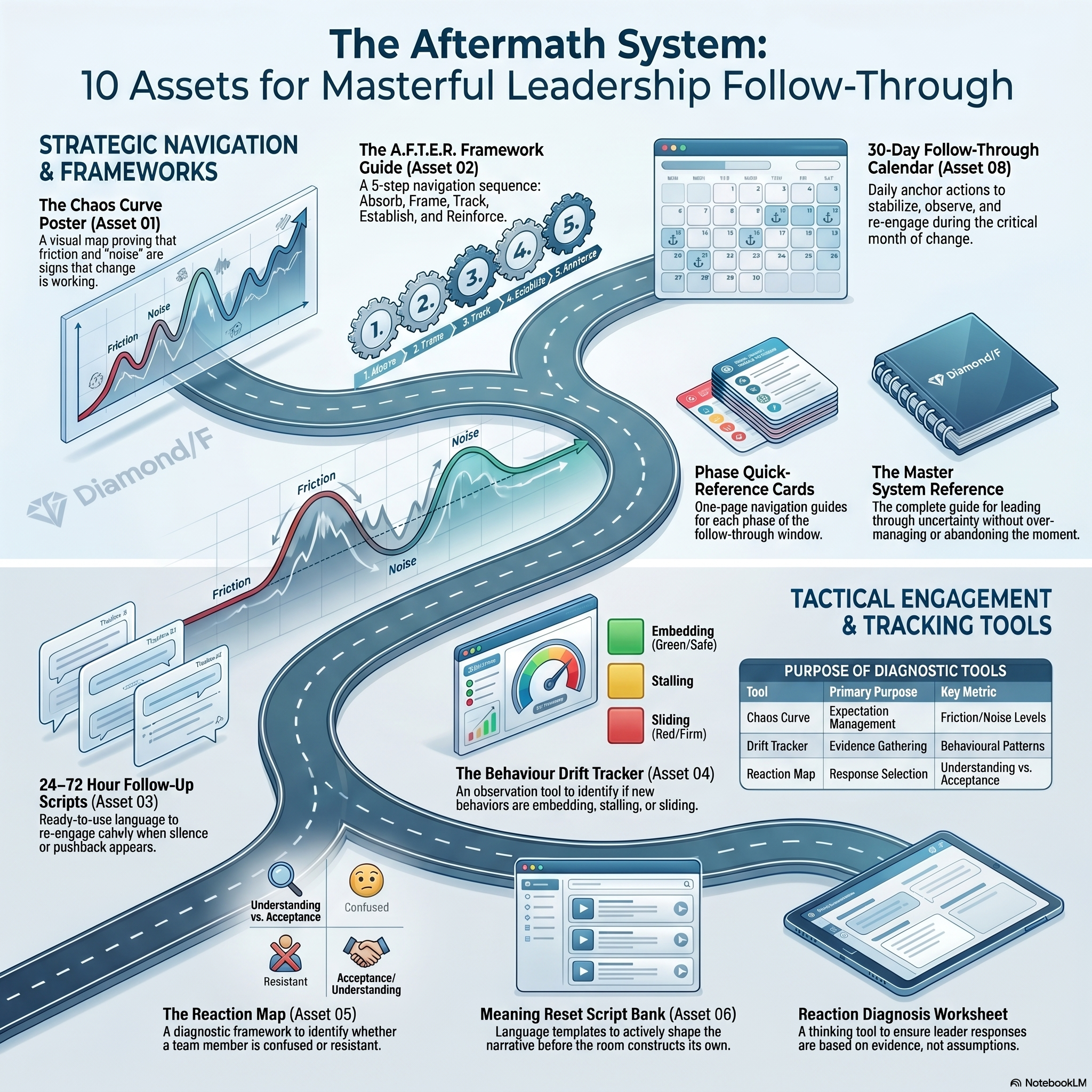 Image 2 of 9
 Image 3 of 9
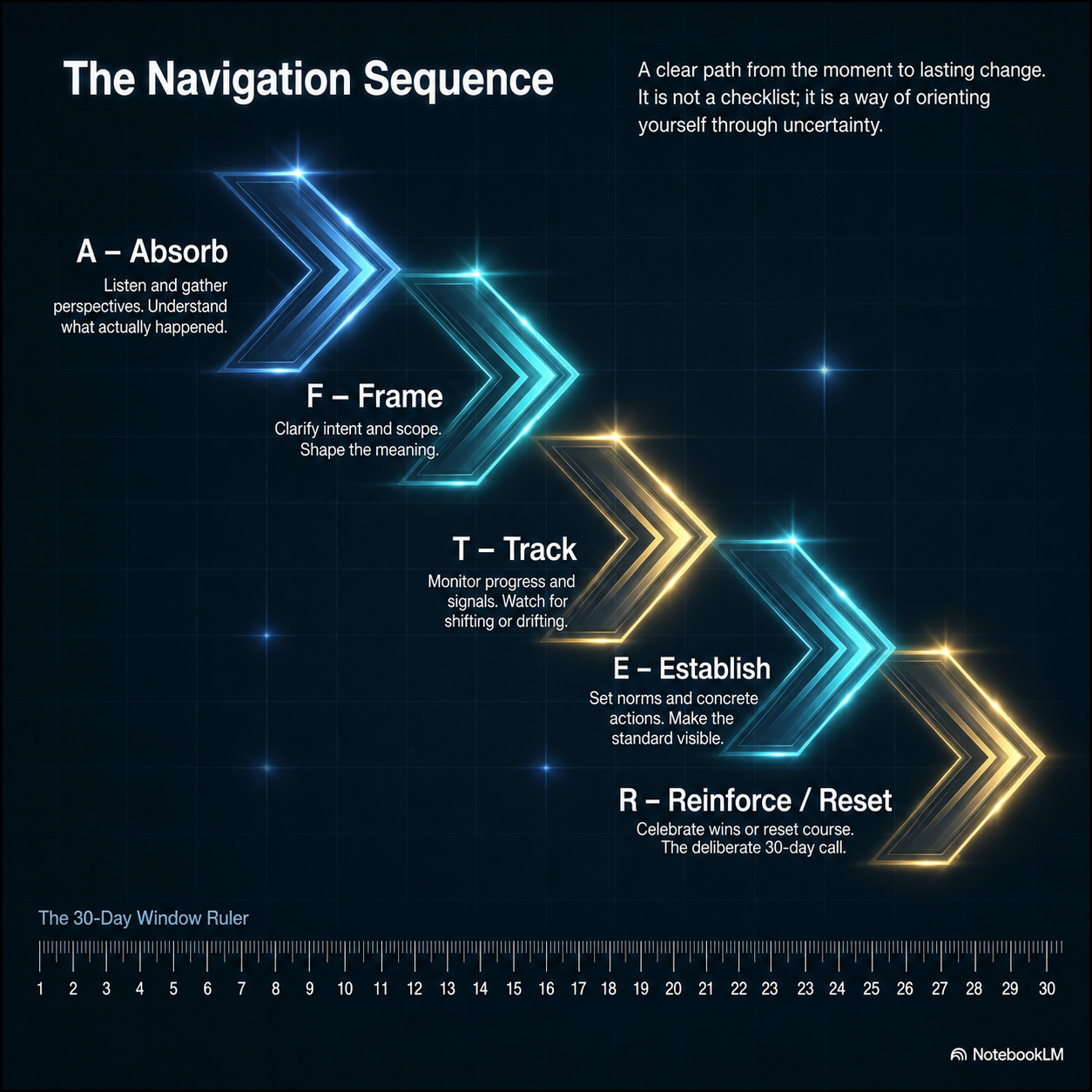 Image 4 of 9
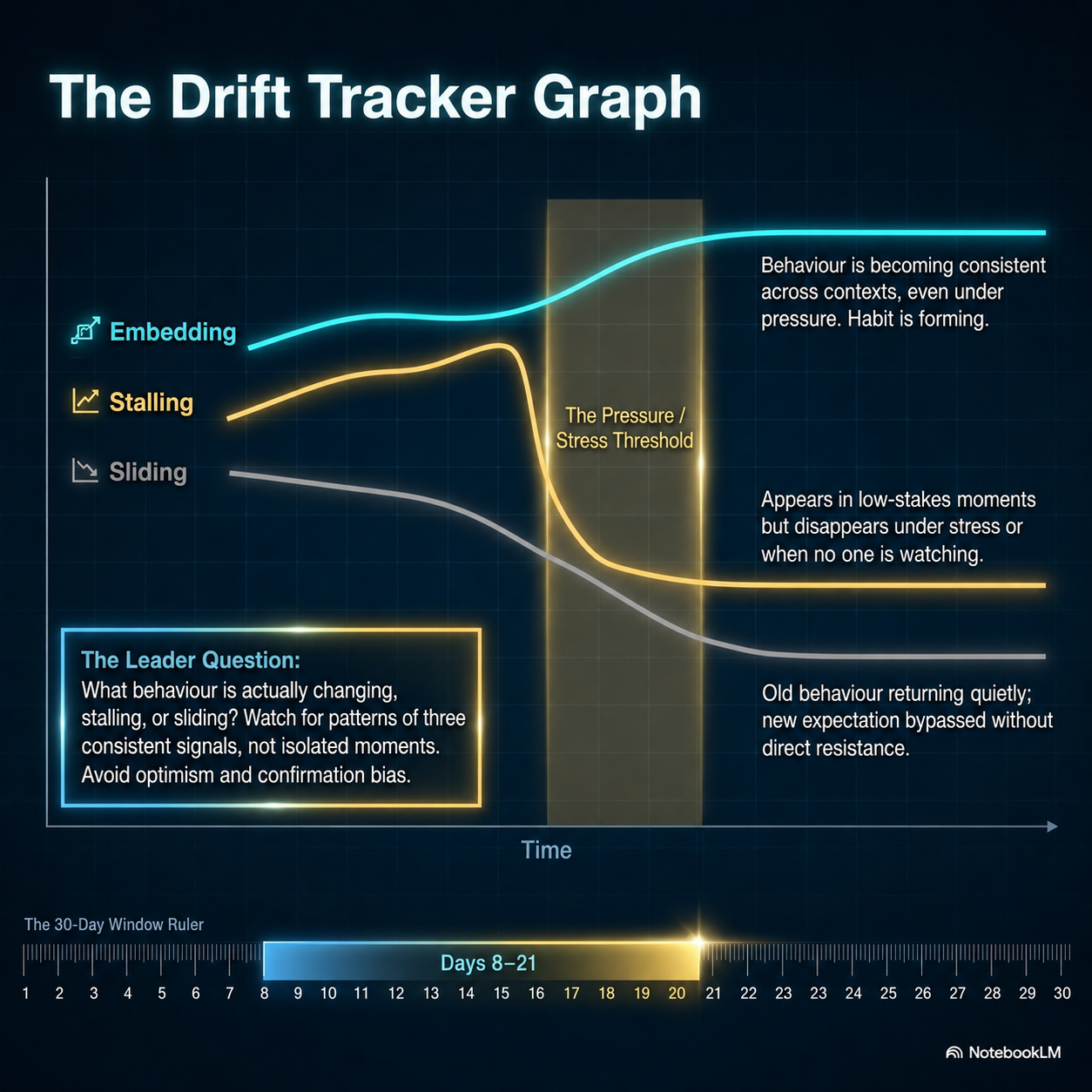 Image 5 of 9
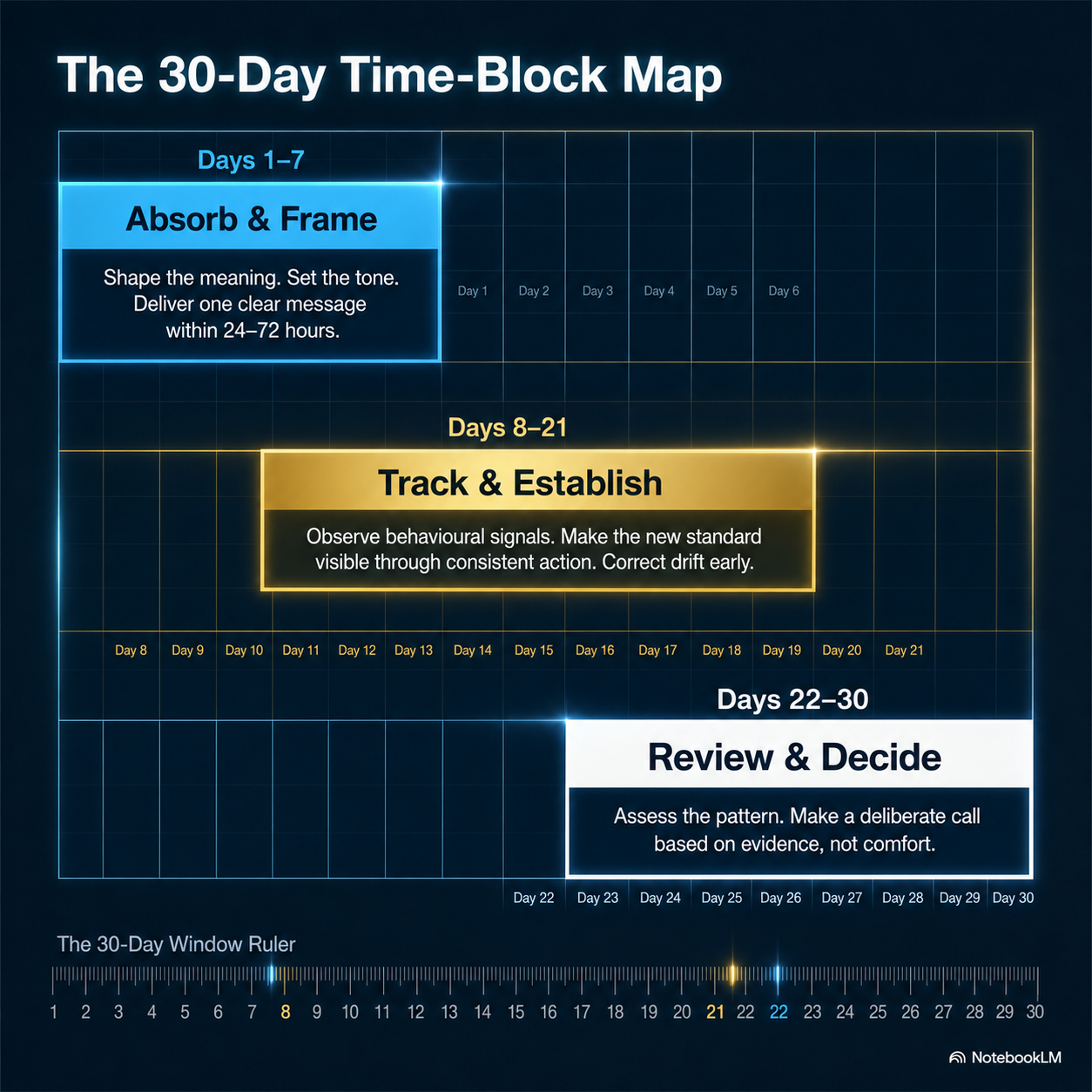 Image 6 of 9
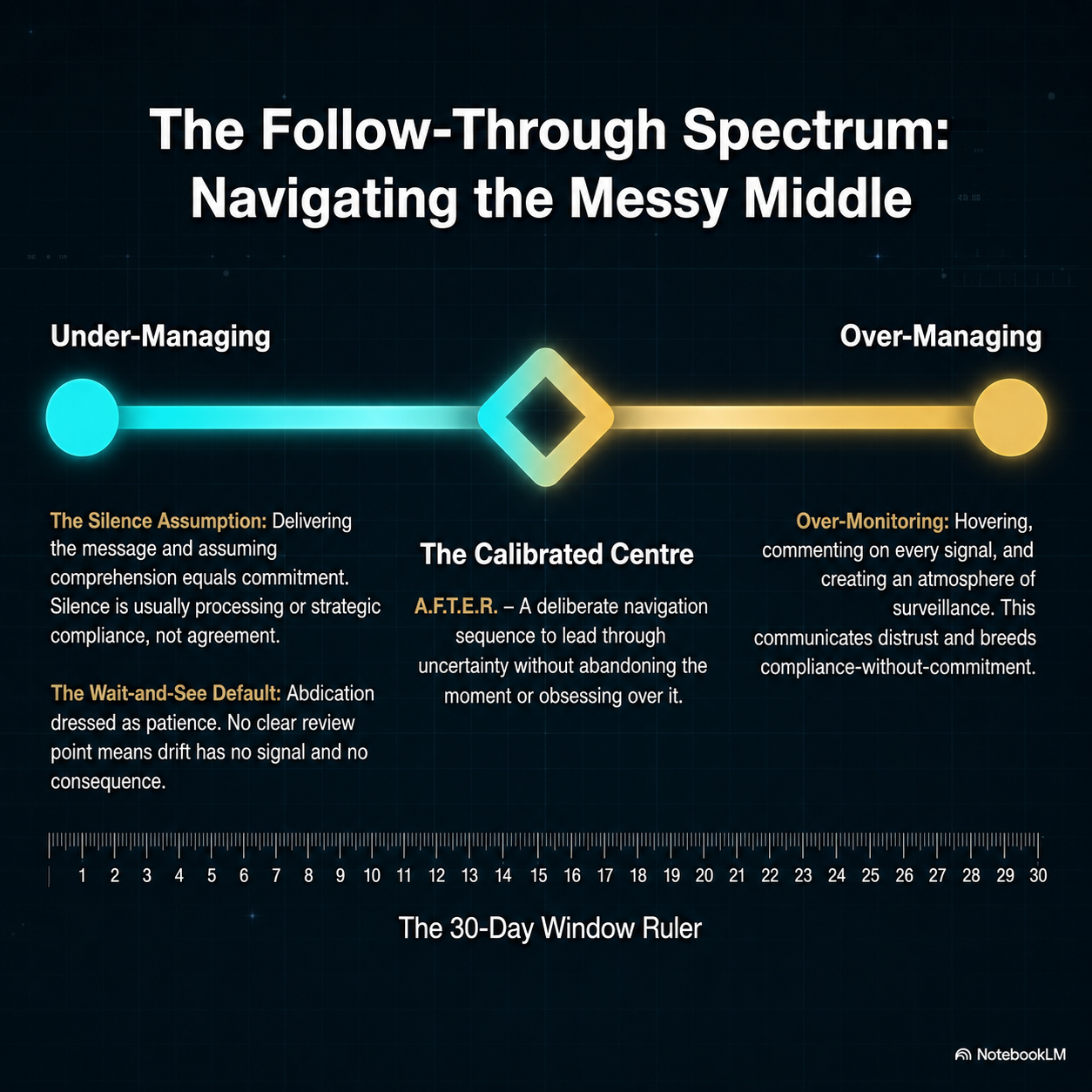 Image 7 of 9
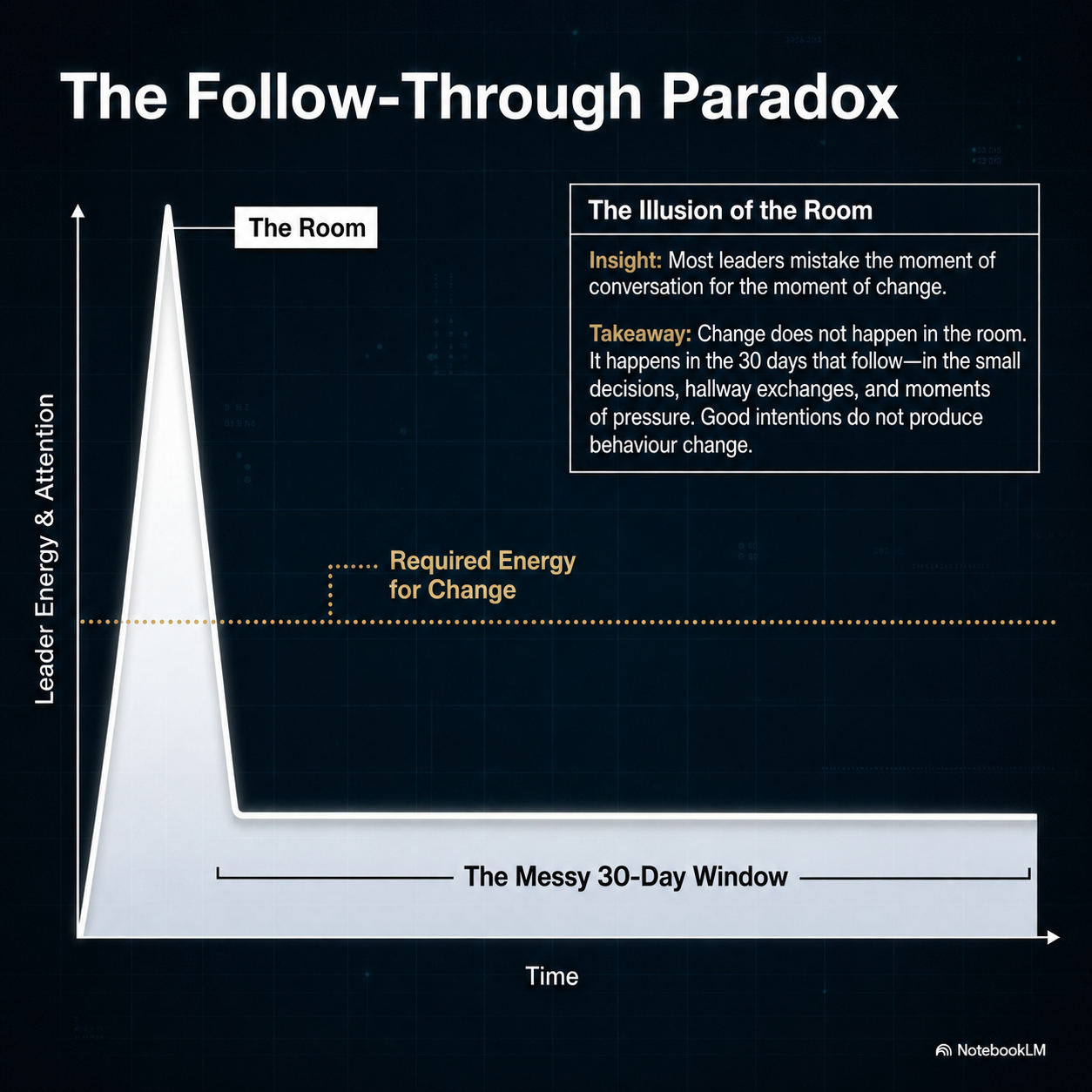 Image 8 of 9
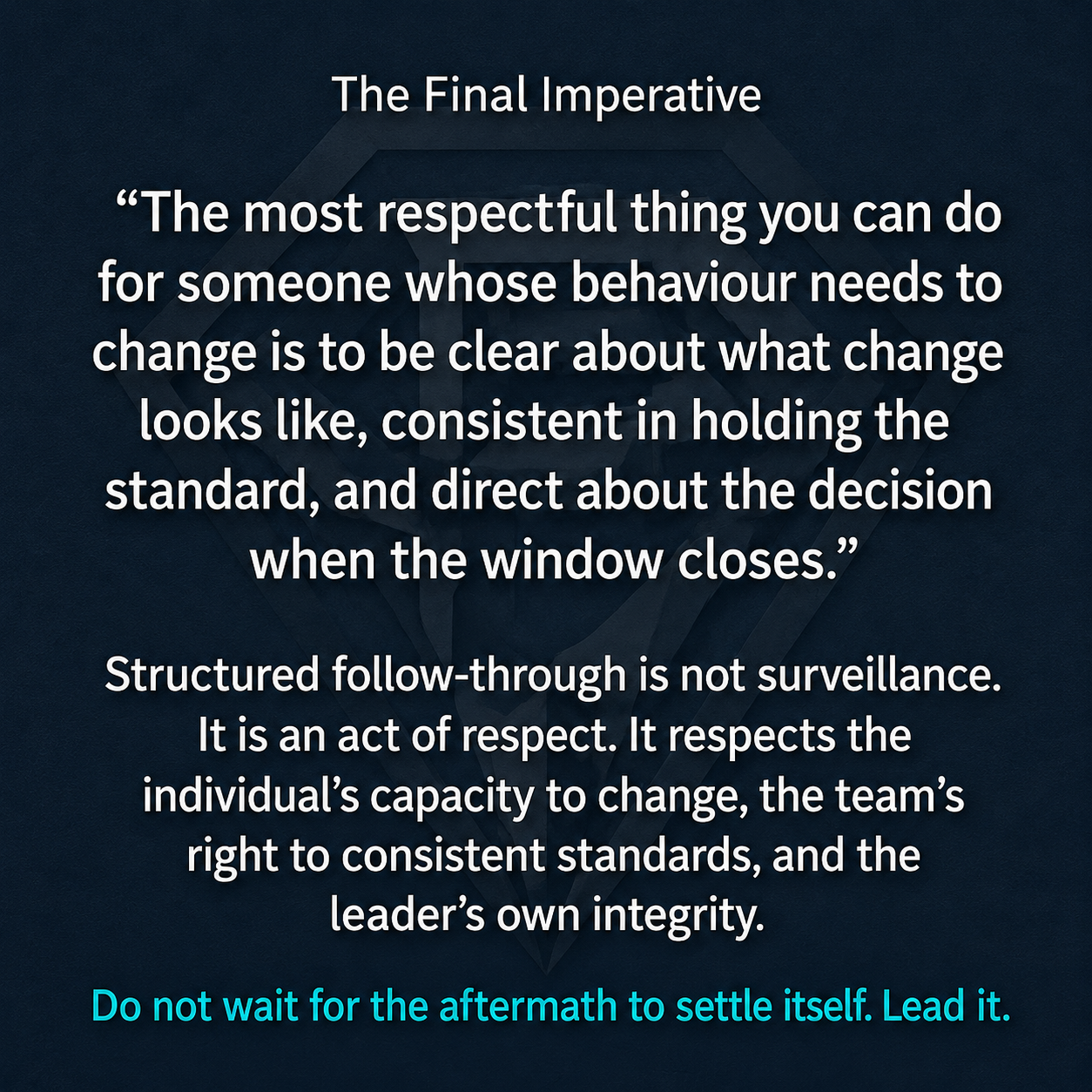 Image 9 of 9
The Aftermath System: 30-Day Leadership Follow-Through Kit
The Aftermath System: 30-Day Leadership Follow-Through Kit
The Aftermath System is a 30-day leadership follow-through kit for managers who have already had the difficult conversation, reset the standard, delivered the workshop or made the decision, and now need to make sure the change actually sticks.
Most managers act, then wait.
They rely on the conversation, the workshop or the reset to do more work than it can actually do. For a few days, things may feel calmer. The team may say the right things. Behaviour may appear to improve.
But relief is not resolution.
The real leadership work happens in the 30 days after the moment, when old habits start to return quietly, standards get tested and the team watches whether the leader really meant what they said.
The Aftermath System gives you practical scripts, trackers, templates and decision tools to help you follow up, spot behaviour drift, reinforce progress and reset expectations before the old pattern becomes normal again.
This is for the period after the hard part
Most leadership tools focus on preparation.
How to plan the conversation.
How to run the workshop.
How to explain the decision.
How to reset expectations.
Those things matter, but they are not enough.
The most dangerous period is often what happens next. The meeting ends. The workshop closes. The conversation is over. Everyone goes back to work.
That is when the standard either starts becoming normal practice or quietly starts weakening.
This kit is built for that window.
Use this kit after
a difficult conversation
a team reset
a workshop
a restructure
a behaviour issue
a change announcement
a new expectation has been introduced
a decision has been made and people are now adjusting to it
It helps you stay close to the change without hovering over people. It gives you structure without turning you into a micromanager. It helps you keep the standard visible without constantly repeating yourself.
The problem it solves
Most managers do not fail because they never take action.
They fail because they treat the action as the finish line.
The conversation happens, but the follow-up is vague.
The workshop lands, but the behaviour is not tracked.
The expectation is explained, but not reinforced.
The team reset is announced, but old habits are allowed to creep back in.
This is behaviour drift.
It rarely arrives loudly.
It shows up in small moments. Someone tests the edge of the standard. Someone slips back into the old rhythm. The team waits to see whether the leader will name it. The leader notices, but says nothing because they do not want to seem harsh, repetitive or controlling.
That is where the standard starts to soften.
The Aftermath System replaces passive waiting with deliberate follow-through.
What this kit helps you do
The Aftermath System helps you:
follow up after a difficult conversation without sounding awkward or aggressive
track whether behaviour is improving, stalling or drifting backwards
notice team reactions before they become resistance
reset meaning after a decision, workshop or change
decide whether to support, reinforce, correct or escalate
run a structured team debrief after a workshop, reset or significant event
keep the 30-day follow-through window visible and manageable
check whether your support has quietly become avoidance
This is not about pressure.
It is not about surveillance.
It is not about turning leadership into a heavy process.
It is about knowing what to do after the first moment of clarity has passed.
What is inside The Aftermath System
The kit includes ten practical leadership assets.
You can use them as a complete 30-day follow-through system or choose the specific tool you need for the situation in front of you.
01. The Chaos Curve Poster
A visual guide that explains why disruption, emotion and friction can be signs of change taking hold, not proof that the change has failed.
Use this when the team feels unsettled and you need to understand what is happening beneath the surface.
02. The A.F.T.E.R. Framework Guide
A five-step follow-through framework for the aftermath period:
Absorb.
Frame.
Track.
Establish.
Reinforce or reset.
Use this as the main structure for leading the 30 days after a significant leadership moment.
03. The 24-72 Hour Follow-Up Scripts
Ready-to-use manager scripts for the critical first few days after a difficult conversation, team reset, workshop or decision.
Use these when you need to follow up without escalating, softening the message or letting the moment disappear.
04. The Behaviour Drift Tracker
A 30-day observation worksheet to help you notice whether behaviour is shifting, stalling or sliding back.
Use this when you need evidence, not guesswork.
05. The Reaction Map
A diagnostic tool for mapping team reactions based on understanding and acceptance.
Use this when people appear compliant on the surface, but you are not sure whether the message has really landed.
06. The Meaning Reset Script Bank
Practical language templates for shaping the narrative after a decision, change or difficult moment.
Use this when people are filling the silence with their own version of what happened.
07. The Reinforce or Reset Decision Tree
A structured decision tool to help you work out whether to support, reinforce, correct or escalate.
Use this when you are unsure whether the person needs encouragement, clarity or a firmer reset.
08. The 30-Day Follow-Through Calendar
A simple cadence tool built around weekly anchor actions and five-minute daily leadership habits.
Use this to keep follow-through visible without adding another heavy process to your week.
09. The Team Debrief Guide
A 60 to 90 minute facilitated discussion structure for teams after workshops, resets, restructures or significant changes.
Use this when the group needs to reflect, make sense of what happened and agree what changes now.
10. The Leader Self-Audit
Direct questions to help you examine your own leadership behaviour during the aftermath period.
Use this when you need to check whether you are genuinely supporting change or quietly avoiding the discomfort of holding the line.
Who this is for
The Aftermath System is for team leaders, people managers and mid-level leaders who are responsible for making change real after the first message has been delivered.
It is especially useful if you have recently:
had a difficult conversation with an employee
reset expectations with your team
delivered a leadership or culture workshop
addressed poor behaviour
introduced a new standard
managed a restructure or change process
noticed the team sliding back into old habits
realised you need a better follow-up structure after leadership action
This is for the manager who does not want to overreact, disappear or keep repeating the same message.
It is for the manager who wants to lead the aftermath properly.
Why the 30-day window matters
The first conversation creates the opening.
The next 30 days decide whether the change becomes real.
That window is where people test the standard. It is where the team watches what the leader reinforces, ignores, corrects or allows. It is where the new expectation either becomes normal practice or slowly becomes another thing that was said once and forgotten.
The danger is not always open resistance.
Often, the danger is drift.
The Aftermath System helps you catch that drift early.
Support is not the same as avoidance
One of the hardest parts of leadership is knowing the difference between support and avoidance.
Support keeps the person connected to the standard.
Avoidance removes the standard so the leader can feel kind.
Support gives clarity.
Avoidance gives relief.
Support helps people change.
Avoidance lets the old pattern stay comfortable.
The Aftermath System helps you stay fair, steady and clear when the moment becomes uncomfortable.
What you receive
You receive a digital download containing the full Aftermath System and ten supporting assets.
Includes:
workbook
scripts
checklists
templates
trackers
decision tools
debrief guide
30-day follow-through calendar
leader self-audit questions
This is a practical toolkit you can start using straight away after a difficult conversation, team reset, workshop or change process.
Start leading the aftermath
The most important leadership work often happens after the visible moment has passed.
Not during the meeting.
Not during the workshop.
Not during the decision itself.
After.
That is where standards are either reinforced or quietly lost.
The Aftermath System gives you the structure to lead that period with calm, clarity and follow-through.
Frequently asked questions
What should a manager do after a difficult conversation with an employee?
After a difficult conversation, the worst thing a manager can do is disappear and hope the issue improves on its own.
The next step is structured follow-through. That means checking in within the first few days, watching for behaviour drift, reinforcing progress and resetting expectations early if the old pattern starts returning.
The Aftermath System gives managers scripts, trackers and a 30-day follow-through structure for this exact period.
How do I follow up after a difficult conversation without micromanaging?
Good follow-up is not micromanagement when it is tied to a clear standard.
The difference is tone, timing and purpose. You are not hovering over the person or watching every move. You are checking whether the agreed behaviour is showing up, whether support is needed and whether the standard is still clear.
The Aftermath System includes 24 to 72 hour follow-up scripts and a behaviour drift tracker to help managers stay calm, specific and consistent.
What is behaviour drift in leadership?
Behaviour drift is the quiet return to old habits after a difficult conversation, team reset, workshop or decision.
It usually does not happen dramatically. It shows up in small moments. A missed expectation. A softened standard. A person testing the edge of the agreement. A team quietly waiting to see whether the leader will name it.
The Aftermath System helps managers spot behaviour drift early and decide whether to support, reinforce or reset the standard.
How long should a manager follow up after a team reset?
The first 30 days after a team reset are critical.
That is the window where people test whether the new standard is real, temporary or optional. It is also where the leader’s consistency matters most.
The Aftermath System gives managers a 30-day follow-through calendar with weekly anchor actions and simple daily leadership habits, so the reset does not disappear once everyone gets busy again.
What should I do after a leadership workshop to make sure it sticks?
After a leadership workshop, the manager needs to turn insight into visible behaviour.
That means running a practical team debrief, agreeing what changes now, tracking whether behaviour shifts and reinforcing progress over the next month.
The Aftermath System includes a team debrief guide, behaviour drift tracker and 30-day follow-through calendar to help managers keep the workshop alive after the session ends.
What is included in The Aftermath System?
The Aftermath System includes ten practical leadership tools:
The Chaos Curve Poster, A.F.T.E.R. Framework Guide, 24-72 Hour Follow-Up Scripts, Behaviour Drift Tracker, Reaction Map, Meaning Reset Script Bank, Reinforce or Reset Decision Tree, 30-Day Follow-Through Calendar, Team Debrief Guide and Leader Self-Audit.
Together, they help managers lead the 30 days after a difficult conversation, team reset, workshop or decision.
Is The Aftermath System for new managers or experienced managers?
The Aftermath System can help both.
It is especially useful for managers who already know how to take action, but struggle with the period afterwards. They have had the conversation, made the decision or reset the standard, but they need a clearer way to follow through without overreacting, avoiding the issue or becoming vague.
Can I use The Aftermath System after a performance conversation?
Yes.
The Aftermath System is useful after a performance conversation because it helps managers avoid vague follow-up. It gives you structure for checking progress, noticing behaviour drift, reinforcing improvement and deciding when the standard needs to be reset.
Can I use this toolkit with my whole team?
Yes.
Some tools are designed for individual follow-up, while others are useful with the whole team. The Team Debrief Guide, Chaos Curve Poster, Reaction Map and 30-Day Follow-Through Calendar are especially useful after team workshops, restructures, resets or shared behaviour issues.
Is this a coaching programme or a digital download?
The Aftermath System is a digital download.
It is a practical leadership follow-through toolkit with scripts, templates, checklists, trackers and decision tools. You can start using it straight away after a difficult conversation, team reset, workshop or change process.
The Aftermath System: 30-Day Leadership Follow-Through Kit
The Aftermath System is a 30-day leadership follow-through kit for managers who have already had the difficult conversation, reset the standard, delivered the workshop or made the decision, and now need to make sure the change actually sticks.
Most managers act, then wait.
They rely on the conversation, the workshop or the reset to do more work than it can actually do. For a few days, things may feel calmer. The team may say the right things. Behaviour may appear to improve.
But relief is not resolution.
The real leadership work happens in the 30 days after the moment, when old habits start to return quietly, standards get tested and the team watches whether the leader really meant what they said.
The Aftermath System gives you practical scripts, trackers, templates and decision tools to help you follow up, spot behaviour drift, reinforce progress and reset expectations before the old pattern becomes normal again.
This is for the period after the hard part
Most leadership tools focus on preparation.
How to plan the conversation.
How to run the workshop.
How to explain the decision.
How to reset expectations.
Those things matter, but they are not enough.
The most dangerous period is often what happens next. The meeting ends. The workshop closes. The conversation is over. Everyone goes back to work.
That is when the standard either starts becoming normal practice or quietly starts weakening.
This kit is built for that window.
Use this kit after
a difficult conversation
a team reset
a workshop
a restructure
a behaviour issue
a change announcement
a new expectation has been introduced
a decision has been made and people are now adjusting to it
It helps you stay close to the change without hovering over people. It gives you structure without turning you into a micromanager. It helps you keep the standard visible without constantly repeating yourself.
The problem it solves
Most managers do not fail because they never take action.
They fail because they treat the action as the finish line.
The conversation happens, but the follow-up is vague.
The workshop lands, but the behaviour is not tracked.
The expectation is explained, but not reinforced.
The team reset is announced, but old habits are allowed to creep back in.
This is behaviour drift.
It rarely arrives loudly.
It shows up in small moments. Someone tests the edge of the standard. Someone slips back into the old rhythm. The team waits to see whether the leader will name it. The leader notices, but says nothing because they do not want to seem harsh, repetitive or controlling.
That is where the standard starts to soften.
The Aftermath System replaces passive waiting with deliberate follow-through.
What this kit helps you do
The Aftermath System helps you:
follow up after a difficult conversation without sounding awkward or aggressive
track whether behaviour is improving, stalling or drifting backwards
notice team reactions before they become resistance
reset meaning after a decision, workshop or change
decide whether to support, reinforce, correct or escalate
run a structured team debrief after a workshop, reset or significant event
keep the 30-day follow-through window visible and manageable
check whether your support has quietly become avoidance
This is not about pressure.
It is not about surveillance.
It is not about turning leadership into a heavy process.
It is about knowing what to do after the first moment of clarity has passed.
What is inside The Aftermath System
The kit includes ten practical leadership assets.
You can use them as a complete 30-day follow-through system or choose the specific tool you need for the situation in front of you.
01. The Chaos Curve Poster
A visual guide that explains why disruption, emotion and friction can be signs of change taking hold, not proof that the change has failed.
Use this when the team feels unsettled and you need to understand what is happening beneath the surface.
02. The A.F.T.E.R. Framework Guide
A five-step follow-through framework for the aftermath period:
Absorb.
Frame.
Track.
Establish.
Reinforce or reset.
Use this as the main structure for leading the 30 days after a significant leadership moment.
03. The 24-72 Hour Follow-Up Scripts
Ready-to-use manager scripts for the critical first few days after a difficult conversation, team reset, workshop or decision.
Use these when you need to follow up without escalating, softening the message or letting the moment disappear.
04. The Behaviour Drift Tracker
A 30-day observation worksheet to help you notice whether behaviour is shifting, stalling or sliding back.
Use this when you need evidence, not guesswork.
05. The Reaction Map
A diagnostic tool for mapping team reactions based on understanding and acceptance.
Use this when people appear compliant on the surface, but you are not sure whether the message has really landed.
06. The Meaning Reset Script Bank
Practical language templates for shaping the narrative after a decision, change or difficult moment.
Use this when people are filling the silence with their own version of what happened.
07. The Reinforce or Reset Decision Tree
A structured decision tool to help you work out whether to support, reinforce, correct or escalate.
Use this when you are unsure whether the person needs encouragement, clarity or a firmer reset.
08. The 30-Day Follow-Through Calendar
A simple cadence tool built around weekly anchor actions and five-minute daily leadership habits.
Use this to keep follow-through visible without adding another heavy process to your week.
09. The Team Debrief Guide
A 60 to 90 minute facilitated discussion structure for teams after workshops, resets, restructures or significant changes.
Use this when the group needs to reflect, make sense of what happened and agree what changes now.
10. The Leader Self-Audit
Direct questions to help you examine your own leadership behaviour during the aftermath period.
Use this when you need to check whether you are genuinely supporting change or quietly avoiding the discomfort of holding the line.
Who this is for
The Aftermath System is for team leaders, people managers and mid-level leaders who are responsible for making change real after the first message has been delivered.
It is especially useful if you have recently:
had a difficult conversation with an employee
reset expectations with your team
delivered a leadership or culture workshop
addressed poor behaviour
introduced a new standard
managed a restructure or change process
noticed the team sliding back into old habits
realised you need a better follow-up structure after leadership action
This is for the manager who does not want to overreact, disappear or keep repeating the same message.
It is for the manager who wants to lead the aftermath properly.
Why the 30-day window matters
The first conversation creates the opening.
The next 30 days decide whether the change becomes real.
That window is where people test the standard. It is where the team watches what the leader reinforces, ignores, corrects or allows. It is where the new expectation either becomes normal practice or slowly becomes another thing that was said once and forgotten.
The danger is not always open resistance.
Often, the danger is drift.
The Aftermath System helps you catch that drift early.
Support is not the same as avoidance
One of the hardest parts of leadership is knowing the difference between support and avoidance.
Support keeps the person connected to the standard.
Avoidance removes the standard so the leader can feel kind.
Support gives clarity.
Avoidance gives relief.
Support helps people change.
Avoidance lets the old pattern stay comfortable.
The Aftermath System helps you stay fair, steady and clear when the moment becomes uncomfortable.
What you receive
You receive a digital download containing the full Aftermath System and ten supporting assets.
Includes:
workbook
scripts
checklists
templates
trackers
decision tools
debrief guide
30-day follow-through calendar
leader self-audit questions
This is a practical toolkit you can start using straight away after a difficult conversation, team reset, workshop or change process.
Start leading the aftermath
The most important leadership work often happens after the visible moment has passed.
Not during the meeting.
Not during the workshop.
Not during the decision itself.
After.
That is where standards are either reinforced or quietly lost.
The Aftermath System gives you the structure to lead that period with calm, clarity and follow-through.
Frequently asked questions
What should a manager do after a difficult conversation with an employee?
After a difficult conversation, the worst thing a manager can do is disappear and hope the issue improves on its own.
The next step is structured follow-through. That means checking in within the first few days, watching for behaviour drift, reinforcing progress and resetting expectations early if the old pattern starts returning.
The Aftermath System gives managers scripts, trackers and a 30-day follow-through structure for this exact period.
How do I follow up after a difficult conversation without micromanaging?
Good follow-up is not micromanagement when it is tied to a clear standard.
The difference is tone, timing and purpose. You are not hovering over the person or watching every move. You are checking whether the agreed behaviour is showing up, whether support is needed and whether the standard is still clear.
The Aftermath System includes 24 to 72 hour follow-up scripts and a behaviour drift tracker to help managers stay calm, specific and consistent.
What is behaviour drift in leadership?
Behaviour drift is the quiet return to old habits after a difficult conversation, team reset, workshop or decision.
It usually does not happen dramatically. It shows up in small moments. A missed expectation. A softened standard. A person testing the edge of the agreement. A team quietly waiting to see whether the leader will name it.
The Aftermath System helps managers spot behaviour drift early and decide whether to support, reinforce or reset the standard.
How long should a manager follow up after a team reset?
The first 30 days after a team reset are critical.
That is the window where people test whether the new standard is real, temporary or optional. It is also where the leader’s consistency matters most.
The Aftermath System gives managers a 30-day follow-through calendar with weekly anchor actions and simple daily leadership habits, so the reset does not disappear once everyone gets busy again.
What should I do after a leadership workshop to make sure it sticks?
After a leadership workshop, the manager needs to turn insight into visible behaviour.
That means running a practical team debrief, agreeing what changes now, tracking whether behaviour shifts and reinforcing progress over the next month.
The Aftermath System includes a team debrief guide, behaviour drift tracker and 30-day follow-through calendar to help managers keep the workshop alive after the session ends.
What is included in The Aftermath System?
The Aftermath System includes ten practical leadership tools:
The Chaos Curve Poster, A.F.T.E.R. Framework Guide, 24-72 Hour Follow-Up Scripts, Behaviour Drift Tracker, Reaction Map, Meaning Reset Script Bank, Reinforce or Reset Decision Tree, 30-Day Follow-Through Calendar, Team Debrief Guide and Leader Self-Audit.
Together, they help managers lead the 30 days after a difficult conversation, team reset, workshop or decision.
Is The Aftermath System for new managers or experienced managers?
The Aftermath System can help both.
It is especially useful for managers who already know how to take action, but struggle with the period afterwards. They have had the conversation, made the decision or reset the standard, but they need a clearer way to follow through without overreacting, avoiding the issue or becoming vague.
Can I use The Aftermath System after a performance conversation?
Yes.
The Aftermath System is useful after a performance conversation because it helps managers avoid vague follow-up. It gives you structure for checking progress, noticing behaviour drift, reinforcing improvement and deciding when the standard needs to be reset.
Can I use this toolkit with my whole team?
Yes.
Some tools are designed for individual follow-up, while others are useful with the whole team. The Team Debrief Guide, Chaos Curve Poster, Reaction Map and 30-Day Follow-Through Calendar are especially useful after team workshops, restructures, resets or shared behaviour issues.
Is this a coaching programme or a digital download?
The Aftermath System is a digital download.
It is a practical leadership follow-through toolkit with scripts, templates, checklists, trackers and decision tools. You can start using it straight away after a difficult conversation, team reset, workshop or change process.